Monday – Saturday: 8:00 AM –
6:00 PM
Monday – Saturday: 8:00 AM –
6:00 PM


A property owner on the Upper West Side found us on Google after tree roots turned their sidewalk into a tripping hazard, and we walked them through the entire fix, from permits to the final DOT sign-off.
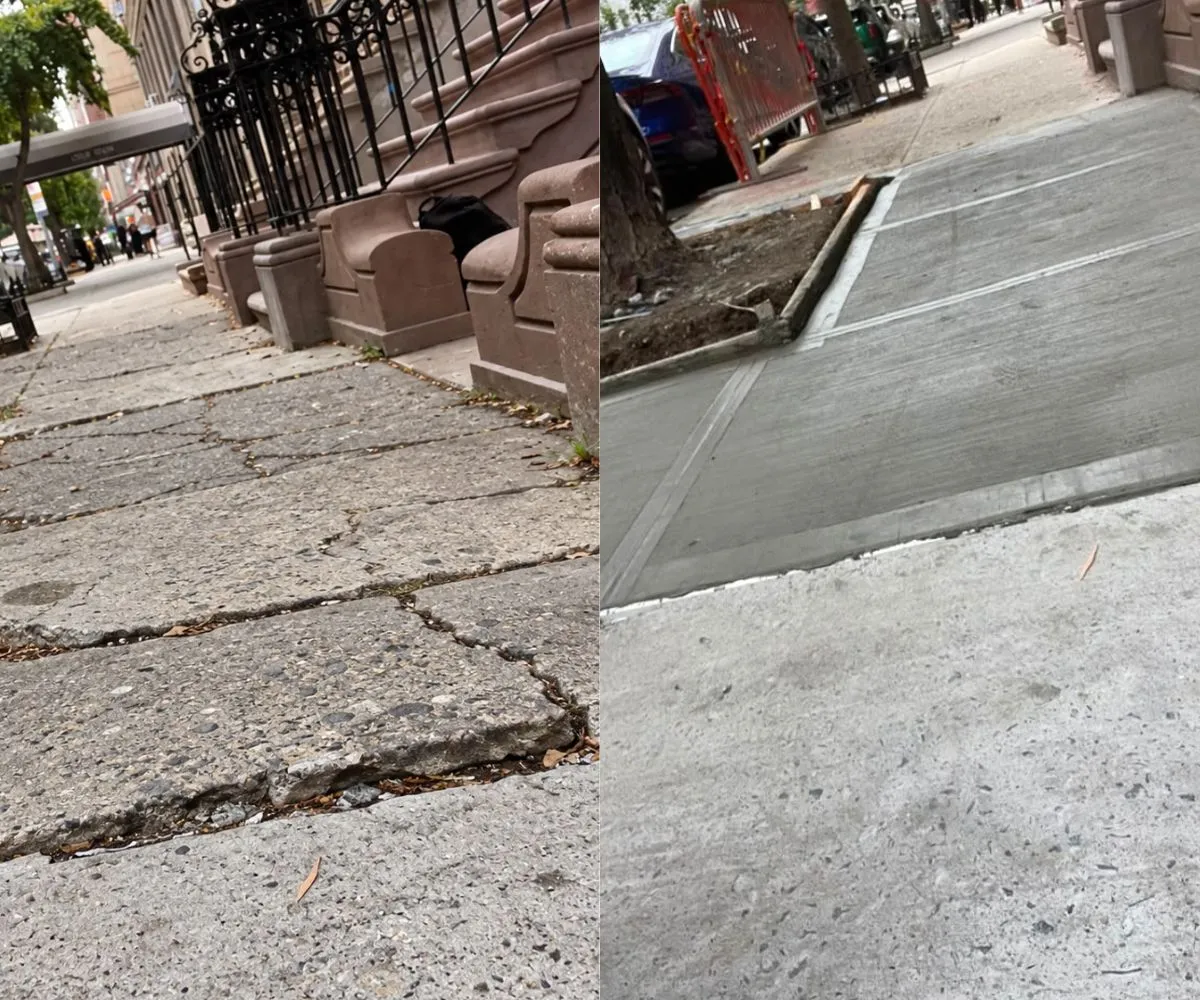
If you've ever watched a street tree slowly wreck the sidewalk in front of your home, you know it doesn't happen overnight. The roots creep outward and push against the concrete from below, and eventually the slabs have nowhere to go but up. That's exactly what happened at 53 W 71st St in Manhattan, where a homeowner was dealing with lifted, uneven concrete and an active sidewalk violation.
Because the property sits inside a historic district on the Upper West Side, this wasn't a simple "rip it out and pour new concrete" job. It meant juggling sidewalk regulations, tree protection rules, multiple permits, and the Landmarks Preservation Commission, all before a single slab could come out. Our team handled every piece of it, start to finish.
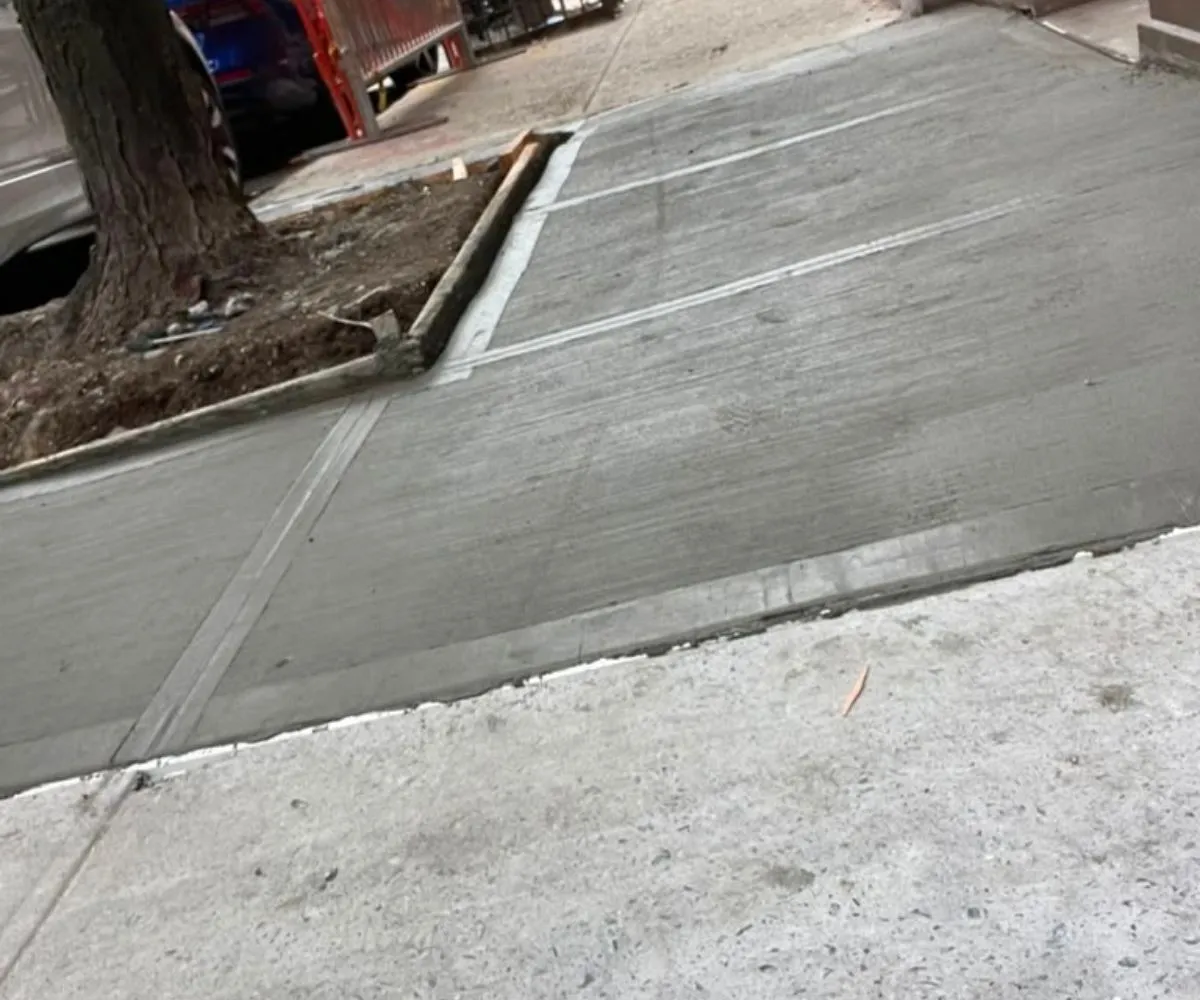
Project Snapshot
- Client: Residential property owner
- Location: 53 W 71st St, New York, NY 10023
- Neighborhood: Upper West Side, Manhattan
- Area repaired: About 125 square feet
- Slabs replaced: 5
- Cause: Street tree root growth
- Cost: Around $4,500, permits included
- Timeline: Up to 60 days, start to finish
The real problem wasn't the cracked concrete. It was roots.
Tree roots had been pushing up through the sidewalk for a while, and five slabs, roughly 125 square feet of concrete, had lifted enough to become a genuine trip hazard. Pouring fresh concrete over that wouldn't have solved anything. The roots would have just kept growing and lifted the new slabs right along with the old ones. Any real fix had to deal with what was happening below ground, not just what was visible above it.
Working around a mature street tree takes more care.
You can't just cut through roots because they're in the way. Sever the wrong ones, and you risk destabilizing the tree or running into compliance issues with the city. So instead of treating those roots as debris to clear out, we built root management right into the repair. That meant authorized pruning where it was actually necessary, followed by a root barrier to help steer future growth away from the new sidewalk.
Four separate approvals had to come together.
This project needed a DOT sidewalk repair permit, a sidewalk closing permit, a NYC Parks tree work permit, and LPC approval. Getting all of that squared away up front mattered a lot here, because starting the physical work before the paperwork was in order could have slowed down the violation dismissal later on.
Getting the sidewalk level again meant more than just pouring new concrete.
Once roots lift concrete, the surrounding grades stop lining up. After clearing the damaged slabs and handling the roots, we had to rebuild the sidewalk so the new sections met the surrounding pavement smoothly, with no awkward lips or dips. The goal wasn't just fresh-looking concrete. It needed to hold up to a DOT inspection.
Fixing the sidewalk doesn't automatically clear the violation.
That's the part people often don't realize. Once the concrete work wrapped up, we still had to file the dismissal inspection request and coordinate with DOT to get the violation officially cleared from the record. Skipping that step would have left the homeowner with a repaired sidewalk and an unresolved violation on paper.
How We Approached the Repair
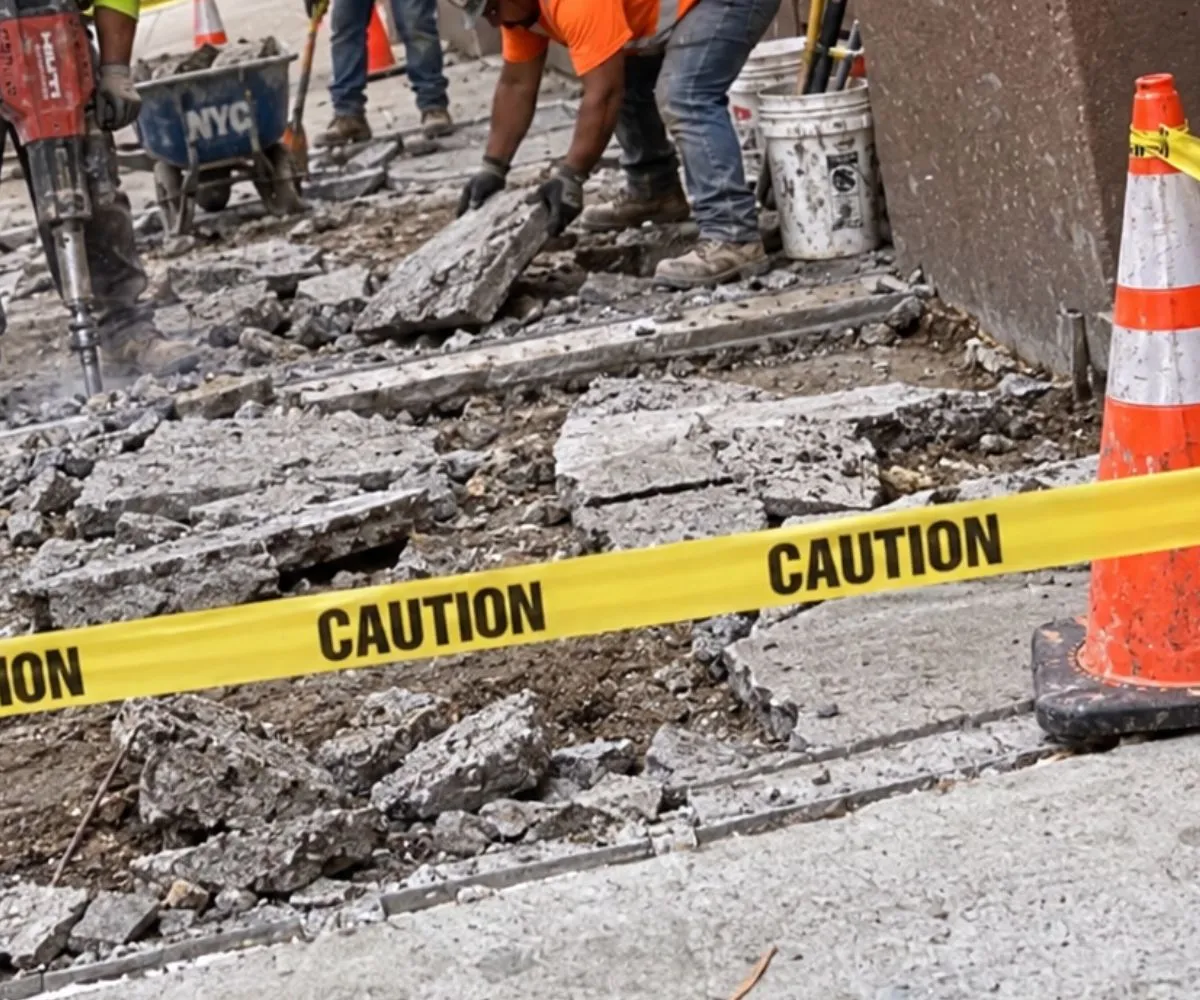
- We assessed the site before touching anything. Our team walked the frontage, confirmed the five affected slabs, and evaluated root involvement, surrounding grades, and what permits we'd need. Planning it out ahead of time meant we weren't discovering compliance issues mid-project.
- We handled every permit and approval first. Sidewalk permits, tree work authorization, LPC requirements, all of it got sorted before demolition started.
- We prepped the work area. The affected sidewalk section was isolated so we could safely manage demolition, pedestrian flow, and site access.
- We removed the damaged slabs. Pulling out the five affected sections gave us a clear look at the base conditions and exactly how far the roots had spread.
- We pruned the roots carefully and only where needed. Nothing more than what the repair actually required, to limit disturbance to the tree.
- We installed a root barrier. It won't stop a tree from growing, nothing can, but paired with responsible pruning, it gives the new sidewalk a much better shot at staying level long-term.
- We corrected the base and the grade. Unstable ground underneath new concrete is a recipe for cracking and settling down the road, so we made sure the base was solid and the elevations matched the surrounding sidewalk.
- We poured 4,000 PSI reinforced concrete. Strong enough and reinforced enough to hold up as a long-term sidewalk fix, not a temporary patch.
- We finished the surface and cleaned the site. The end result was a sidewalk that actually matched the look of the surrounding Upper West Side block.
- We filed the dismissal inspection request. A finished repair doesn't clear a violation on its own, so this step got the ball rolling with DOT.
- We saw it through to final sign-off. From the first permit application to the final clearance, the whole process took about 60 days.
Why this repair mattered beyond just one property
This block sits in the heart of Lincoln Square, just a couple of minutes from P.S. 199 Jessie Isador Straus and the Special Music School, with Central Park a short walk east and Riverside Park close by to the west. It's also home to Project FIND, the senior services organization headquartered right at 160 W 71st Street, and CityMD's West 69th urgent care at Broadway and Amsterdam sees a steady stream of neighborhood patients just two blocks down. A lot of people, of very different ages and needs, cross this stretch of sidewalk every day.
Kids walking to P.S. 199 or the Special Music School don't need to be dodging lifted concrete on their way there. Older adults heading to Project FIND for senior services, or anyone stopping into CityMD for an urgent visit, shouldn't have to navigate uneven slabs either. And for the many seniors living in the co-ops and rental buildings along Central Park West and West 71st Street, small changes in sidewalk height can be a real hazard, not just an inconvenience. Fixing this sidewalk made the block safer for everyone who walks it, not just the property owner who called us.
We also made sure this wasn't a patch job. By dealing with the roots directly instead of pouring over them, we gave this repair a real shot at lasting, rather than lifting again in a year or two, right along this well-traveled corner of the Upper West Side.
What the Client Had to Say
"I found them on Google while looking for someone experienced with sidewalk violations and tree-root damage in Manhattan. They explained the permit process clearly and handled everything from the tree work and concrete replacement to the inspection and DOT sign-off. The sidewalk came out great, and it was a relief having one team manage the whole process instead of dealing with different agencies myself."
The Bottom Line
Tree root damage combined with a sidewalk violation and a historic district designation is about as complicated as this work gets in New York City. Getting it right meant lining up every approval before breaking ground, dealing with the roots the correct way, rebuilding with concrete that will actually hold up, and following through all the way to DOT's final sign-off.
Dealing with a lifted sidewalk or an open DOT violation?
Eden Concrete Contractors NY manages the whole process, permits, root work, concrete replacement, inspections, and final sign-off, so you don't have to coordinate five different agencies yourself. We work across Manhattan, Brooklyn, Queens, and the Bronx. Contact us today for a sidewalk inspection and repair estimate.