Monday – Saturday: 8:00 AM –
6:00 PM
Monday – Saturday: 8:00 AM –
6:00 PM


A mixed-use property owner in Lenox Hill needed a worn, uneven sidewalk repaired after years of heavy pedestrian traffic. We handled the project from permitting and concrete replacement through the final DOT inspection and sign-off.
Sidewalks along Second Avenue see a lot more activity than a typical residential side street. Between apartment residents, customers visiting local businesses, delivery workers, commuters, and everyday neighborhood foot traffic, concrete in busy Manhattan corridors takes a beating over time.
That was the situation at 1477 2nd Avenue, New York, NY 10075, a mixed-use property in Lenox Hill on Manhattan's Upper East Side. Several sidewalk sections had deteriorated from years of regular use and general wear and tear, creating uneven and damaged areas that needed to be replaced.
Unlike a tree-root repair, this project didn't require NYC Parks coordination, root pruning, or a tree work permit. The property also didn't require LPC approval. The focus was straightforward but important: remove the deteriorated sidewalk, rebuild the affected area correctly, and complete the required DOT process so the property could move forward with a compliant sidewalk.
Project Snapshot
- Client: Mixed-use property owner
- Location: 1477 2nd Avenue, New York, NY 10075
- Neighborhood: Lenox Hill, Upper East Side, Manhattan
- Area repaired: About 300 square feet
- Slabs replaced: 7 sidewalk slabs
- Damage Cause: Heavy foot traffic and general wear and tear
- Cost: Around $5,900, including required permits
- Timeline: Up to 65 days from permit handling and repair work through final inspection/sign-off
Years of Foot Traffic Had Taken a Toll on the Sidewalk
There wasn't one dramatic event behind the damage at this property. Instead, the sidewalk had gradually deteriorated from constant use.
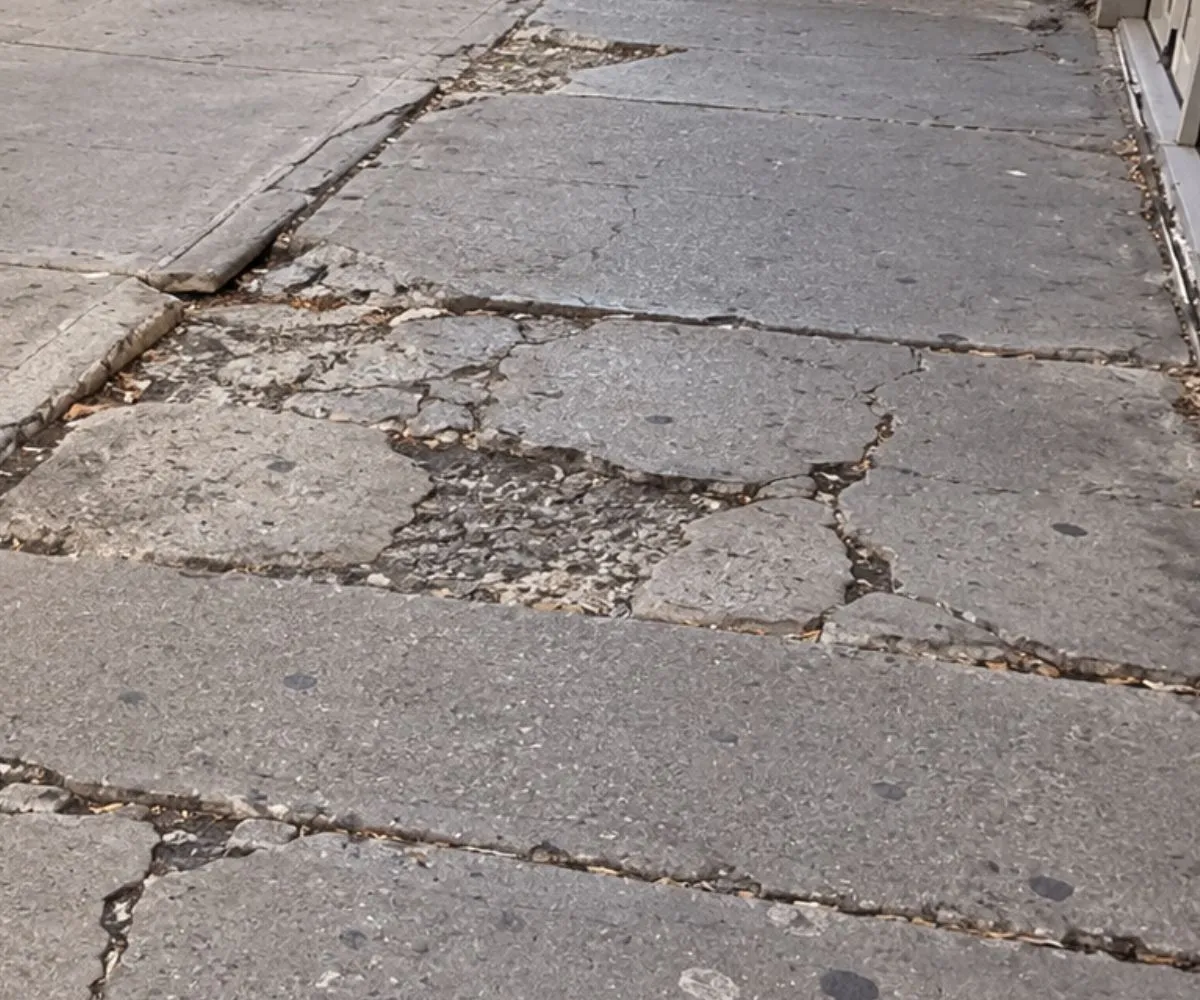
Second Avenue is an active Manhattan corridor, and sidewalks here deal with everything from regular pedestrian traffic to deliveries, carts, weather exposure, seasonal temperature changes, and everyday surface wear.
Over time, seven sections of sidewalk covering approximately 300 square feet had become worn enough to require replacement.
Minor surface deterioration can sometimes be manageable, but once slabs begin cracking, shifting, breaking down, or developing uneven transitions, localized patching often stops being a practical long-term solution.
For this property, replacing the affected sections gave the owner a cleaner and more durable result.
The Location Made Pedestrian Management Important
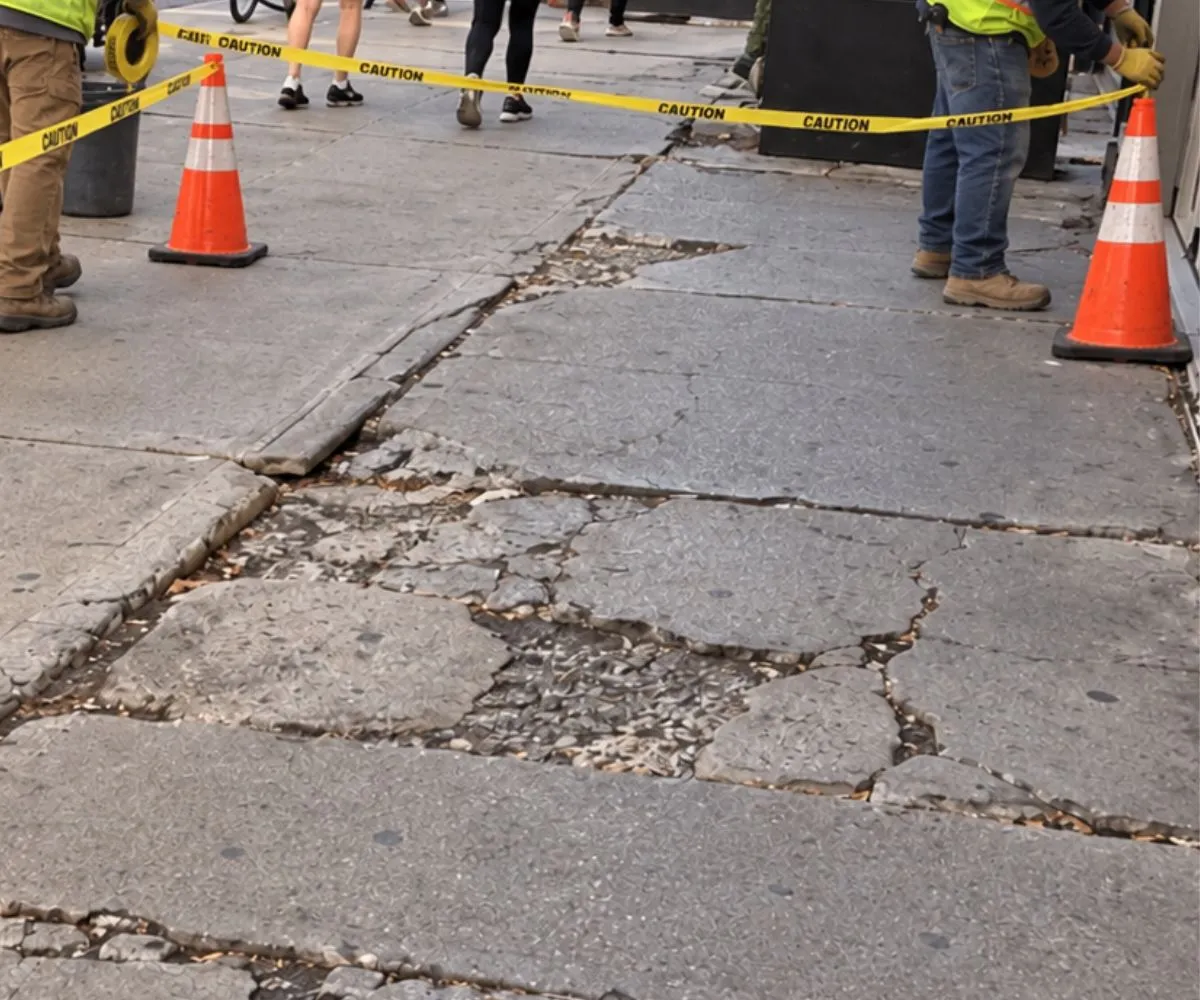
Working on a busy Upper East Side sidewalk is different from repairing concrete on a quiet residential block.
1477 2nd Avenue is a mixed-use building with residential apartments above street-level commercial space. That means pedestrian access couldn't simply be ignored while the repair was underway.
We had to plan the job so demolition, debris removal, concrete work, curing, and pedestrian movement could all be handled safely.
The work area was properly secured while maintaining appropriate access around the property throughout the project.
This Project Did Not Require LPC or NYC Parks Approval
One of the advantages of this particular repair was that there was no street-tree root work involved, so NYC Parks approval and a Tree Work Permit were not necessary.
The project also did not require Landmarks Preservation Commission approval.
That removed two additional layers of agency coordination that are often involved with historic properties or tree-root-damaged sidewalks.
The primary administrative work involved the required sidewalk permits, pedestrian-access planning, utility precautions, and DOT coordination.
Permits and Pre-Construction Planning Came First
Before demolition started, we made sure the project requirements were properly addressed.
The work involved handling the necessary NYC DOT sidewalk repair/construction permit, the appropriate sidewalk closing or pedestrian-control requirements, and an 811 utility notification before excavation and concrete work began.
Taking care of these requirements before construction helps prevent unnecessary delays and keeps the project moving toward final DOT approval.
Why We Replaced the Damaged Sections Instead of Just Patching Them
Surface patching can make deteriorated concrete look better temporarily, but it doesn't always address weakened or failing sidewalk sections.
Since seven slabs were affected, full removal and replacement gave us the opportunity to address the sidewalk from the base upward.
That meant removing deteriorated material, checking the underlying conditions, correcting the grade where necessary, preparing a stable base, and then placing new concrete.
The objective wasn't simply to cover visible defects. It was to rebuild the affected sidewalk sections so they could handle continued pedestrian use along this busy Manhattan corridor.
How We Approached the Repair
- We inspected the sidewalk frontage.
Our team identified the seven deteriorated slabs, measured approximately 300 square feet of affected sidewalk, and reviewed surrounding grades and pedestrian conditions. - We confirmed the required permits.
Because there was no tree-root involvement and no landmark-related approval requirement, the permitting process focused on the applicable NYC DOT sidewalk and pedestrian-access requirements. - We filed the 811 notification.
Utility marking was coordinated before demolition so underground infrastructure could be identified before work began. - We secured and prepared the work area.
The sidewalk repair zone was isolated to protect pedestrians while maintaining appropriate access around the mixed-use property. - We removed the seven deteriorated slabs.
Damaged concrete was carefully broken out and hauled away, exposing the underlying base. - We inspected and prepared the foundation.
Any unstable or uneven base material was corrected before new concrete was installed. - We corrected elevations and transitions.
New sidewalk sections had to line up properly with the surrounding pavement to avoid creating new lips, abrupt transitions, or drainage problems. - We installed fresh concrete.
The replacement sections were poured and finished to create a durable walking surface suitable for the property's heavily traveled frontage. - We completed the surface finish and cleanup.
The sidewalk was finished for traction and appearance, and the work zone was cleared once the concrete was ready. - We prepared the project for DOT inspection.
Once construction was complete, the repair was reviewed and the required dismissal or inspection process was initiated where applicable. - We followed the project through final sign-off.
From permitting and onsite construction to inspection and administrative clearance, the overall process took up to approximately 65 days.
One of the Biggest Challenges Was Working on a Busy Second Avenue Frontage
The concrete itself wasn't the only consideration.
A mixed-use building on Second Avenue has constant movement around it. Residents need access to the property, customers may be visiting street-level businesses, and pedestrians continue moving along the block throughout the day.
That meant the repair had to be carefully staged.
We planned demolition and concrete work around pedestrian access rather than treating the sidewalk as an isolated construction area. Keeping the site organized was especially important during concrete placement and curing, when the fresh sidewalk had to remain protected.
The Repair Mattered: Important Advantages
Repairing approximately 300 square feet of damaged sidewalk delivered several practical benefits for both the property owner and the surrounding neighborhood.
Safer Walking Conditions
Removing deteriorated and uneven concrete reduced potential trip hazards for residents, customers, delivery workers, and pedestrians using Second Avenue.
Better Access to the Property
Because this is a mixed-use building, the sidewalk serves both residential and commercial activity. A level, properly finished walking surface makes everyday access easier for everyone entering or passing the property.
Improved Street Appearance
Seven fresh sidewalk sections significantly improved the appearance of the property's frontage compared with worn and deteriorated concrete.
Better Long-Term Durability
Rather than applying temporary surface patches, the damaged sections were removed and rebuilt from the base up, giving the property a more durable repair.
Reduced Liability Exposure
Maintaining the sidewalk helps property owners address hazardous conditions before they develop into larger safety or liability concerns.
DOT Compliance
The project wasn't considered complete when the concrete dried. We followed the required process through inspection and final agency clearance so the repair was properly documented.
Why Final Sign-Off Matters
One detail NYC property owners sometimes overlook is that repairing the physical sidewalk and clearing an existing violation are two different steps.
New concrete may solve the physical problem, but an open violation doesn't necessarily disappear automatically.
Once the repair was complete, the appropriate inspection or dismissal process had to be followed so DOT could confirm that the sidewalk condition had been corrected.
That's why our work extended beyond demolition and concrete placement. We managed the project through the administrative steps needed for final clearance.
The Result
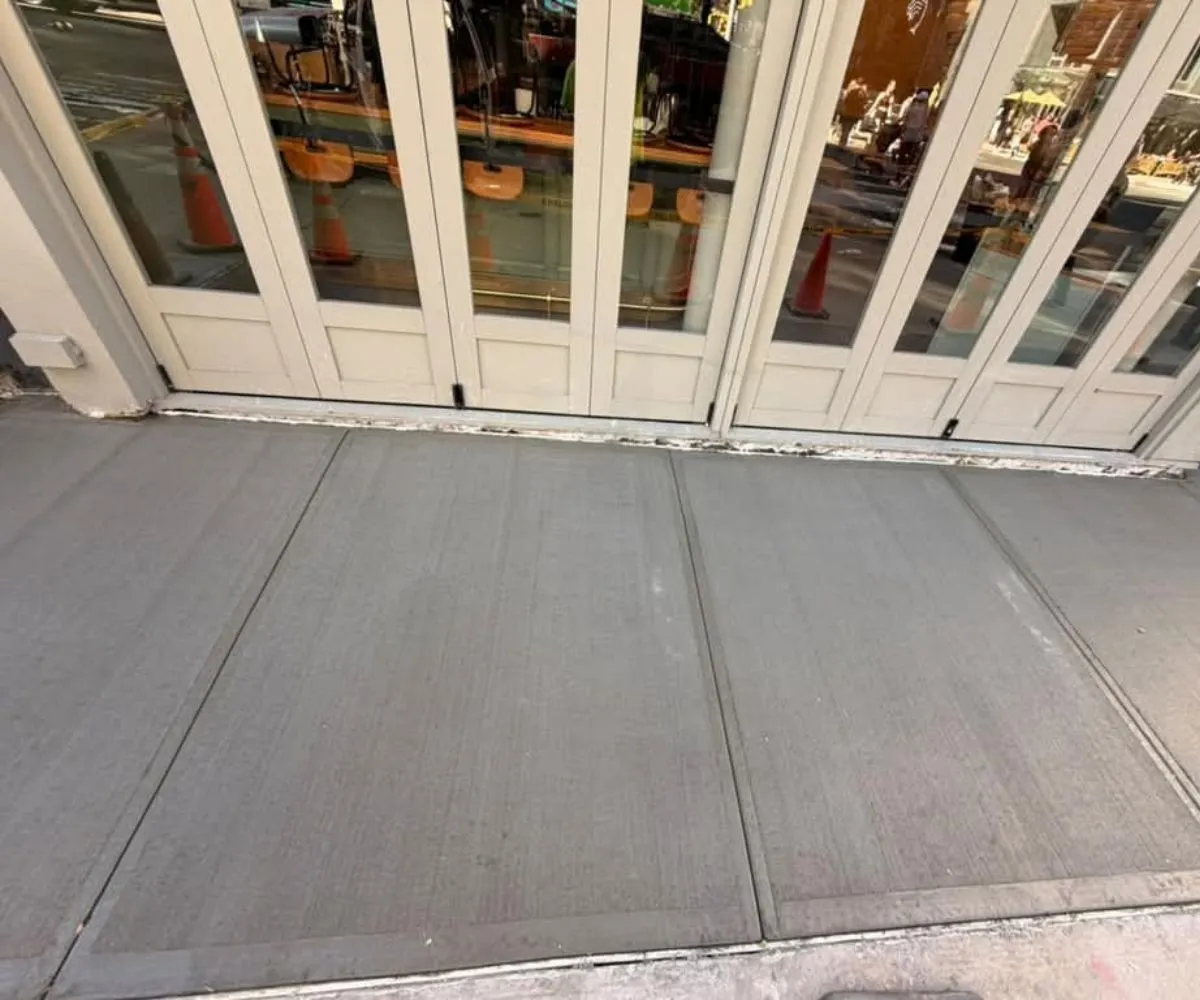
The seven deteriorated sidewalk slabs were replaced across approximately 300 square feet of frontage, giving the property a smoother, cleaner, and more reliable walking surface.
The finished sidewalk improved pedestrian conditions while restoring the appearance of the frontage along one of the Upper East Side's busiest avenues.
The complete project cost was approximately $5,900, including the required permits, with the overall process taking up to 65 days from permitting through final inspection and sign-off.
What the Client Had to Say
"The sidewalk in front of our property had been worn down for years because of the amount of foot traffic on Second Avenue. The team explained what needed to be replaced, handled the permits, completed the concrete work, and stayed involved through the inspection process. It was much easier having one contractor manage everything from beginning to end."
The Bottom Line
Not every damaged NYC sidewalk is caused by tree roots.
At 1477 2nd Avenue, years of heavy pedestrian use and general wear had gradually deteriorated seven sidewalk slabs covering approximately 300 square feet.
The right solution was full replacement rather than another temporary patch.
By handling the permits, demolition, base preparation, concrete replacement, pedestrian coordination, inspection process, and final DOT sign-off as one complete project, we were able to give the property owner a durable sidewalk repair without the need for unnecessary NYC Parks or LPC approvals.
Dealing with cracked, worn, uneven, or violation-marked sidewalk concrete?
Eden Concrete Contractors NY handles the entire sidewalk repair process, including permits, concrete replacement, inspection requests, violation dismissal, and final DOT sign-off.
We serve property owners throughout Manhattan, Brooklyn, Queens, and the Bronx. Contact us today to schedule a sidewalk inspection and get an estimate for your property.