Monday – Saturday: 8:00 AM –
6:00 PM
Monday – Saturday: 8:00 AM –
6:00 PM


At 149-46 41st Ave in Flushing, Queens, Eden Concrete Contractors NYC completed an exterior brick pointing and masonry repair project to restore deteriorated mortar joints and protect the building façade against further weather-related damage.
Years of exposure to rain, temperature changes, moisture, and normal aging had caused sections of mortar between the bricks to deteriorate. Cracked, recessed, and weakened joints were particularly concerning around window openings and other transitions in the façade, where water can find its way behind the masonry.
Rather than waiting for the deterioration to spread, the affected areas were addressed through targeted mortar removal and professional repointing. The goal was to restore sound mortar joints while preserving the existing brickwork wherever possible.
Project Highlights
- Project: Brick Pointing and Exterior Masonry Repair
- Location: 149-46 41st Ave, Flushing, NY
- Neighborhood: Flushing, Queens
- Primary Issue: Deteriorated, cracked, and weakened mortar joints
- Service Provided: Brick pointing, deteriorated mortar removal, mortar joint restoration, localized masonry repairs, and detailed pointing around window openings
- Main Objective: Restore deteriorated masonry joints and reduce potential pathways for water penetration.
- Access: Exterior work performed using ladders and appropriate work-area controls
The Problem: Deteriorating Mortar Joints
Brick masonry can remain durable for decades, but the mortar surrounding the bricks generally experiences deterioration before the brick itself.
At this Flushing property, sections of the exterior façade showed signs of aging and mortar deterioration. Some joints had become cracked, recessed, or weakened, leaving vulnerable areas where rainwater could penetrate.
Window openings required particular attention. These areas contain multiple masonry transitions and edges and can become common entry points for moisture when surrounding mortar deteriorates.
Leaving damaged joints untreated can contribute to problems such as:
- Water infiltration behind the brick façade
- Continued deterioration of surrounding mortar
- Loose or unstable masonry
- Freeze-thaw damage during colder weather
- Interior dampness or moisture problems
- Premature deterioration around windows
- Increasing repair requirements over time
The repair therefore focused on addressing the deteriorated joints before they developed into more extensive masonry problems.
Our Inspection and Repair Approach
Before beginning the pointing work, the façade was visually evaluated to identify areas where the existing mortar had lost its integrity.
Instead of unnecessarily disturbing sound masonry, the repair focused on the deteriorated sections.
Special attention was paid to mortar joints around window openings, corners, edges, and other vulnerable areas. This targeted approach allowed the existing brickwork to remain in place while the failing mortar was restored.
Step 1: Preparing the Work Area
The crew first established a controlled work area around the section of façade being repaired.
Because portions of the work were above ground level, extension ladders were used to reach the affected masonry. Tools and materials were organized at ground level so the pointing work could progress systematically across the façade.
Step 2: Removing Deteriorated Mortar
Successful brick pointing requires more than simply applying fresh mortar over an old joint.
Loose and deteriorated mortar was removed from the affected joints to create a suitable surface and sufficient depth for the replacement mortar.
This step is important because placing new material directly over weak or crumbling mortar can result in a superficial repair that fails prematurely.
Removing the deteriorated material allowed the new mortar to bond more effectively within the existing masonry joints.
Step 3: Cleaning and Preparing the Joints
After the deteriorated mortar was removed, the exposed joints were cleaned and prepared for repointing.
Loose debris and remaining material can interfere with adhesion, so proper joint preparation helps create a stronger connection between the existing masonry and the replacement mortar.
Care was taken throughout this stage to avoid unnecessary damage to the surrounding bricks.
Step 4: Repointing the Brickwork
Fresh mortar was then installed into the prepared joints.
The new material was carefully packed into the joints to restore areas where mortar had cracked, deteriorated, or receded.
The objective was to create consistent, properly filled joints while maintaining the appearance and alignment of the existing brick façade.
Detailed Pointing Around Windows
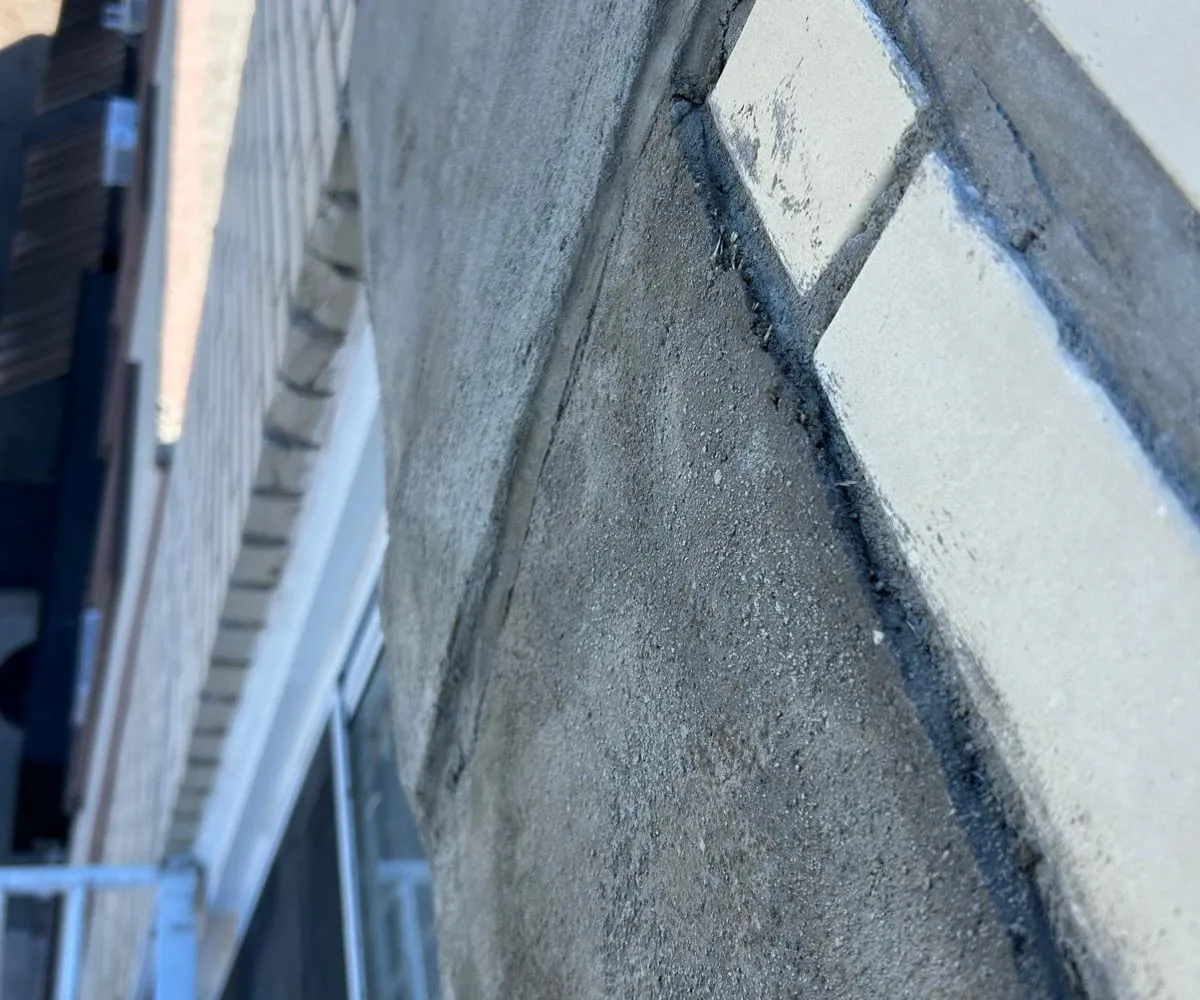
One of the important aspects of this project was the masonry work around the building's window openings.
These locations can be particularly susceptible to moisture because water running down the façade naturally encounters edges, joints, and transitions around windows.
Deteriorated mortar in these areas can provide direct pathways behind the brickwork.
Our crew therefore performed detailed pointing around affected window areas, restoring deteriorated joints and closing visible gaps in the masonry system.
Localized Masonry Repairs
Not every section of a brick façade requires complete reconstruction when mortar begins to fail.
Where the existing bricks remained serviceable, they were preserved, and the repairs concentrated on the joints and localized areas showing deterioration.
This allowed the underlying problem to be addressed without unnecessarily replacing otherwise usable masonry.
The Repair Challenge
The primary challenge at 149-46 41st Ave was completing detailed pointing work across elevated sections of an existing façade while maintaining consistent workmanship around windows and other masonry transitions.
Working around existing architectural features requires careful joint preparation and mortar placement. Window edges, corners, and narrow masonry sections leave less room for error than large uninterrupted areas of brickwork.
Another important consideration was distinguishing between mortar that genuinely required removal and joints that remained serviceable. Removing too little deteriorated material can compromise a repair, while unnecessarily disturbing sound mortar increases the scope of work.
The project therefore required a targeted approach rather than simply covering the entire façade with new material.
Why the Repair Mattered: Important Advantages
The pointing work provided several important benefits to the property.
- Reduced Water Entry Points: Restoring cracked and deteriorated joints helped close potential pathways through which rainwater could penetrate behind the brick façade.
- Protection of Existing Brickwork: Sound mortar joints help keep individual masonry units properly supported and reduce unnecessary movement within the façade.
- Improved Weather Resistance: Repointing restored vulnerable sections of the exterior envelope and provided better protection against rain and seasonal weather exposure.
- Better Appearance: Fresh, consistently finished mortar joints gave the repaired portions of the façade a cleaner and better-maintained appearance.
- Prevention of More Extensive Repairs: Addressing localized mortar deterioration early can help prevent moisture and continued joint failure from developing into more extensive masonry repairs.
Before and After
Before the repairs, the affected portions of the façade contained visibly aged and deteriorated mortar, including weakened joints around important transitions such as window openings.
After the pointing work, these joints were restored with fresh mortar and properly finished to create a more consistent masonry surface.
The most important improvement, however, was functional rather than cosmetic: vulnerable gaps and deteriorated joints were repaired before they could contribute to more serious moisture-related deterioration.
Project Results
The completed project restored the affected mortar joints while retaining the property's existing brickwork wherever possible.
Areas of cracked, deteriorated, and recessed mortar were replaced with properly installed fresh mortar, and particular attention was given to vulnerable locations around windows.
The result was a cleaner, tighter, and more weather-resistant brick façade with improved protection against moisture penetration and continued mortar deterioration.
For the property owner, the work also provided the benefit of dealing with the problem while repairs could still be performed through targeted pointing rather than waiting for deterioration to progress into larger-scale masonry reconstruction.
Maintaining the Repaired Brick Façade
Even after repointing, exterior masonry should be periodically inspected.
Property owners should watch for new cracks in mortar joints, loose bricks, white staining or efflorescence, persistent damp areas, gaps around windows, and sections where mortar begins to crumble or pull away.
Finding these problems early usually makes it easier to address the affected areas before moisture causes more extensive damage.
Need Brick Pointing or Masonry Repair in Flushing, Queens?
If the mortar between your bricks is cracking, crumbling, missing, or pulling away from the masonry, delaying repairs can allow water to penetrate deeper into the façade.
Professional brick pointing removes deteriorated mortar and restores the joints rather than simply covering the visible damage.
If your property is in Flushing or elsewhere in Queens, NY, schedule an exterior masonry inspection with our trusted masonry experts at Eden Concrete Contractors NYC to identify damaged joints and determine whether targeted pointing, localized masonry repair, or more extensive restoration is required.